Outsourcing an indie game is not expensive because freelancers are expensive. It becomes expensive when the scope is unclear, work is duplicated, revisions are unlimited, or the team outsources tasks that should have been solved with reusable systems or ready-made assets.
A useful outsourcing budget starts with a simple equation:
Expected cost = estimated hours × realistic rate + revision / integration reserve.
The difficult part is not the arithmetic. The difficult part is deciding what should be outsourced, how many hours it realistically needs, and what can go wrong after the first delivery.
Use the free Indie Game Outsourcing Cost Calculator if you want to test different hours, rates and contingency percentages while reading this guide.
There is no single “normal” outsourcing rate
Rates depend on discipline, location, experience, complexity, urgency, contract length and whether you are buying execution or ownership of a problem.
A junior artist completing a tightly specified prop has a different job from a senior technical artist responsible for diagnosing a rendering bottleneck. A programmer building one UI screen has a different risk profile from a contractor who must integrate a save system into an unstable project.
Instead of searching for one average hourly rate, estimate the job in two dimensions:
- How specialized is the work?
- How much ambiguity is the contractor expected to solve?
The more ambiguity you transfer to the contractor, the more seniority you usually need.
Split the budget by production category
For a small game, outsourcing usually falls into five large categories.
Art
This can include:
- 3D props and environments;
- characters;
- concept art;
- UI art;
- textures and materials;
- VFX;
- promotional art.
Art budgets become much easier to control when you separate coverage from identity.
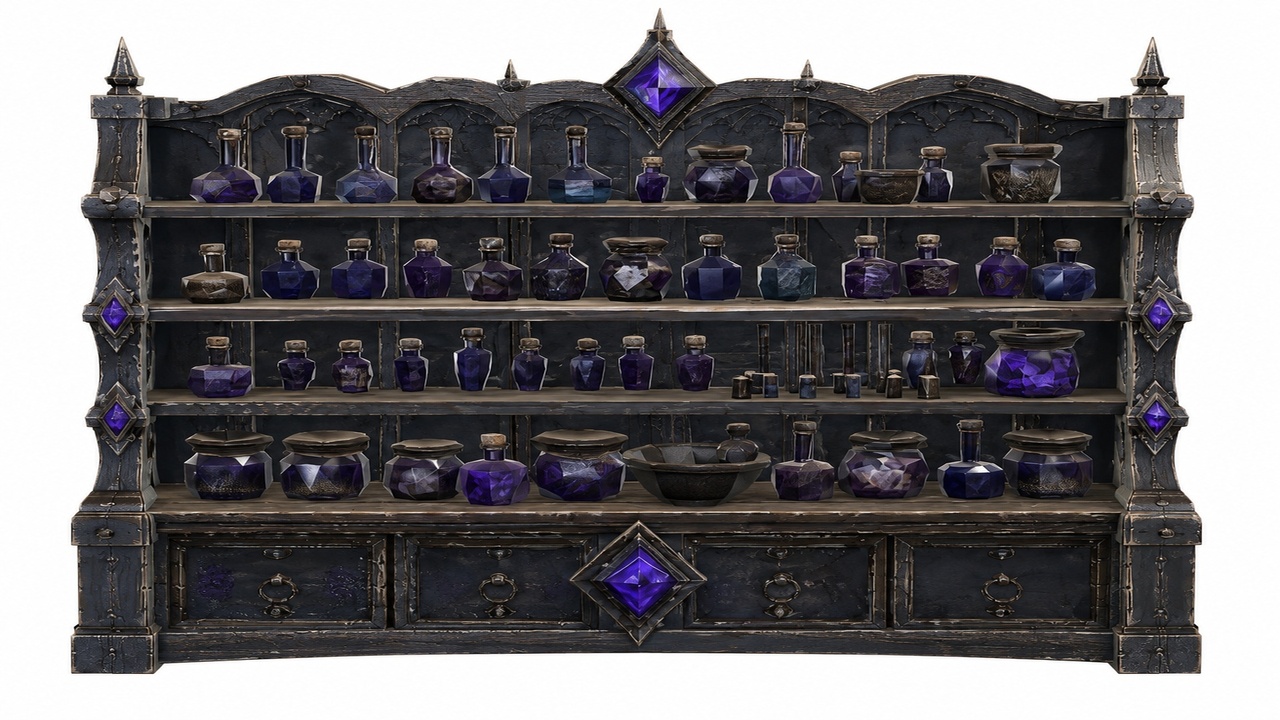
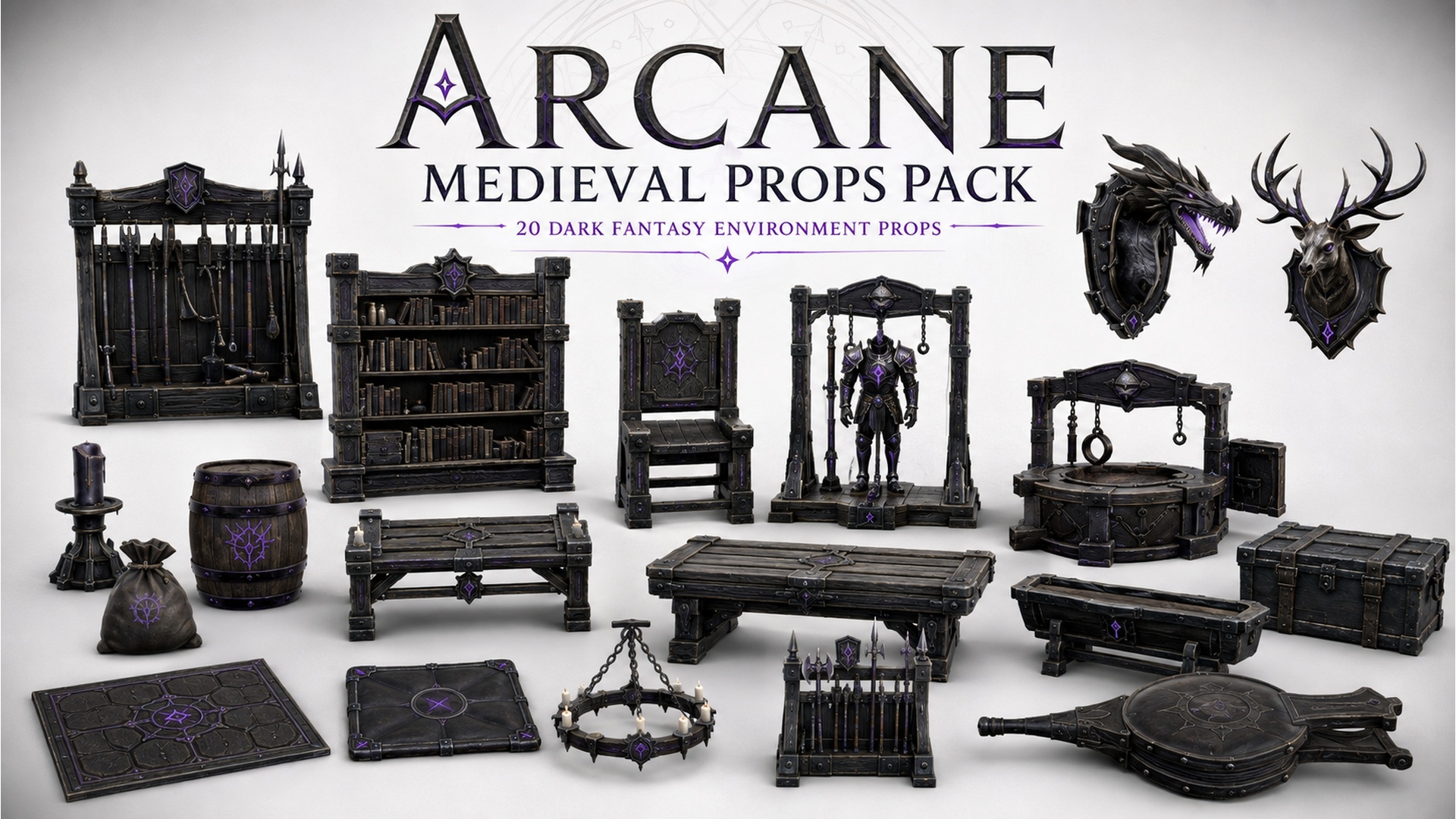
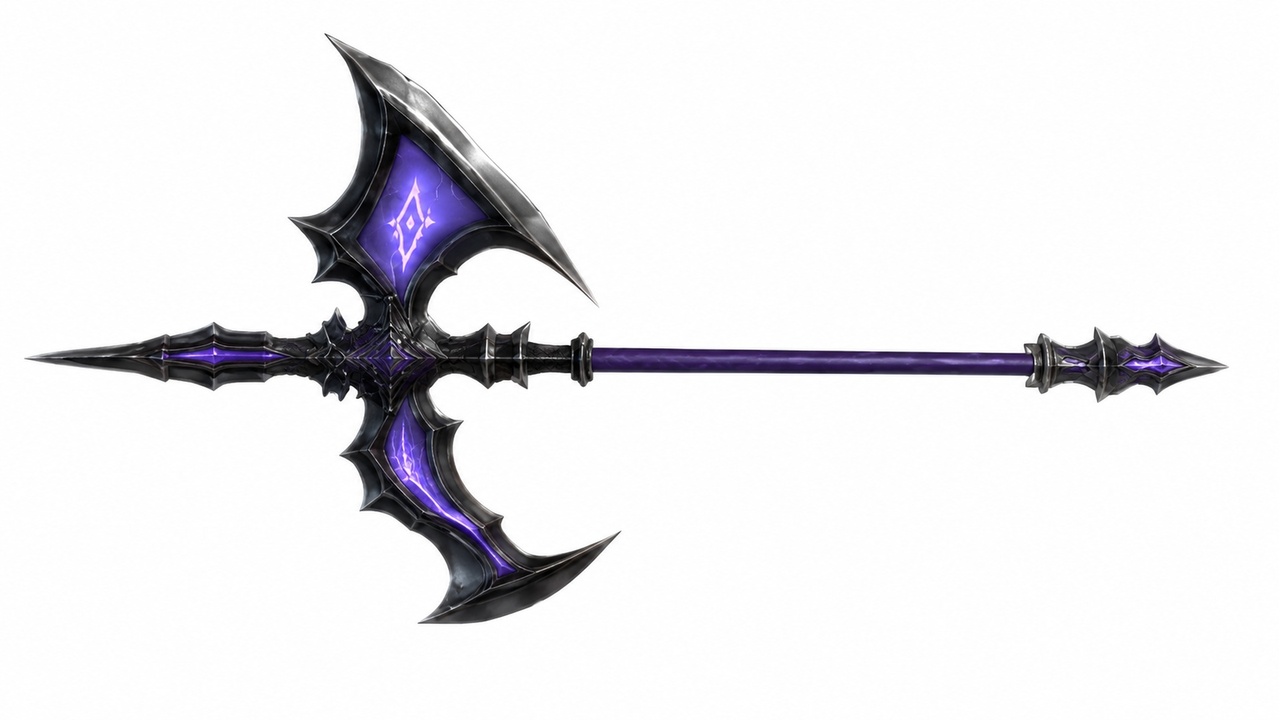
Coverage assets fill the world: crates, furniture, rocks, doors, generic tools, background clutter. Identity assets make the game recognizable: hero weapons, signature architecture, characters, bosses and important gameplay objects.
Ready-made packs are often efficient for coverage. Custom outsourcing is usually strongest for identity and exact technical gaps.
Programming
Programming cost is strongly affected by the state of the existing project.
A feature that sounds small can become expensive if the contractor must first understand undocumented architecture, fix unrelated errors or reverse-engineer systems built without clear interfaces.
Before outsourcing code, define:
- Unity / Unreal / Godot version;
- current project state;
- exact inputs and outputs of the feature;
- what existing systems it must interact with;
- acceptance criteria;
- test scene or reproduction steps;
- source-control expectations.
The cleaner the handoff, the less paid time goes into archaeology.
Animation
Animation cost depends less on the number of clips than many teams expect.
Important cost drivers include:
- whether the rig already exists;
- whether retargeting works cleanly;
- animation complexity;
- root motion requirements;
- weapon / prop interaction;
- number of characters using the same skeleton;
- iteration required to match gameplay timing.
A reusable rig and animation set can reduce future cost dramatically, so this is one area where pipeline decisions matter more than the first invoice.
Audio
Audio outsourcing may include music, sound effects, dialogue editing, implementation or a full audio pass.
Separate content creation from implementation. Buying or commissioning sounds is one task. Making them behave correctly in-game is another.
If your engine implementation is simple, this separation can save money. If the game uses dynamic music, complex ambience or many interactive layers, implementation itself may deserve a specialist.
QA
Testing is often under-budgeted because teams treat it as something that happens “at the end.”
In reality, QA cost rises sharply when fixes arrive late.
A practical budget should include:
- feature testing during production;
- regression testing after fixes;
- platform / resolution checks;
- save/load testing;
- controller / input testing;
- performance testing on target hardware.
If your project is small, a shorter recurring QA pass can be cheaper than one giant emergency pass before launch.
Estimate hours before rates
Teams often start with “what does a freelancer charge?” when the bigger uncertainty is the amount of work.
Start with hours.
Break a deliverable into stages. A 3D asset may involve:
- reference and construction decisions;
- modeling;
- UV / materials;
- optimization;
- export and engine test;
- revisions.
A programming feature may involve:
- project familiarization;
- implementation;
- integration;
- debugging;
- documentation / handoff.
Once you can see the stages, a rate becomes meaningful.
Add a revision and integration reserve
A zero-contingency outsourcing budget is usually fiction.
Even good contractors need feedback. Even good briefs miss something. Integration reveals issues that are invisible in a standalone file.
For small, well-defined tasks, a modest reserve may be enough. For ambiguous features or multi-discipline work, the reserve should be larger.
The outsourcing calculator includes a contingency slider precisely because the first-pass estimate is rarely the final cost.
Do not use the reserve as permission to write a bad brief. Use it to acknowledge normal production uncertainty.
Do not outsource everything
Outsourcing works best when your internal team keeps ownership of the decisions that define the product.
For a solo developer or tiny team, keep these close when possible:
- core gameplay direction;
- final art direction;
- technical architecture;
- feature priority;
- acceptance criteria;
- build integration.
Outsource execution-heavy tasks and specialized gaps.
If you outsource ownership of every decision, coordination becomes a new full-time job.
Buy, create or commission
Every asset or feature should have three possible paths:
Buy — use an existing product or library.
Create — build it internally.
Commission — pay someone to produce the exact thing.
The cheapest path is the one with the lowest total cost after integration and rework, not the lowest purchase price.
For art specifically, the Buy vs Commission 3D Game Assets guide gives a more detailed decision framework.
Reuse is the strongest budget reduction tool
The easiest way to cut outsourcing cost without cutting visible quality is to pay once for work you can reuse.
Examples:
- one modular wall kit used across many buildings;
- one skeleton used by multiple characters;
- one UI component system instead of individually built screens;
- one inventory API used by multiple interactions;
- one material family used by many props;
- one set of environment rules used across levels.
The more reusable the deliverable, the more valuable good planning becomes.
This is why a $100 system can be cheaper than five $30 one-off fixes.
Scope the smallest useful deliverable
Do not outsource “the environment.”
Outsource:
- one modular doorway set;
- one blacksmith room prop set;
- one enemy animation batch;
- one inventory UI flow;
- one performance audit;
- one release QA checklist.
Small deliverables are easier to quote, test, accept and replace if the relationship does not work.
Once a contractor proves reliable, larger scopes become safer.
A practical sample budget
Imagine a small Unity project planning a vertical slice.
The team expects to outsource:
- 80 hours of art;
- 120 hours of programming;
- 40 hours of animation;
- 20 hours of audio;
- 40 hours of QA.
Do not treat those numbers as industry averages. They are only a planning example.
Enter your own hours and rates in the free calculator and change the contingency percentage until the budget matches the uncertainty of your project.
The most valuable output is not the total. It is seeing which category dominates the cost.
That tells you where scope reduction matters most.
Cut scope where the player notices least
When the estimate is too high, do not cut randomly.
Reduce:
- unique background props;
- low-visibility animations;
- one-off decorative systems;
- secondary platform support during the prototype phase;
- custom assets that could be covered by a coherent marketplace pack.
Protect:
- core controls;
- performance;
- save integrity;
- hero visuals;
- gameplay readability;
- features central to the pitch / demo.
Budget cuts should reduce breadth before they destroy the identity of the project.
Fixed-price vs hourly work
Neither model is universally better.
Fixed price works well when:
- deliverables are clear;
- acceptance criteria are measurable;
- revision limits are defined;
- dependencies are stable.
Hourly work is often safer when:
- debugging an unknown problem;
- integrating into a messy codebase;
- iterating on design;
- requirements may change;
- research is part of the task.
The mistake is using a fixed price for an undefined problem or hourly billing for a task that has no scope controls.
Make acceptance criteria boringly specific
A strong outsourced deliverable should be easy to accept or reject.
For a 3D asset:
- exact format;
- scale;
- pivot rule;
- texture maps;
- maximum material count;
- modular dimensions;
- collision requirement;
- target engine version.
For code:
- supported version;
- required inputs;
- expected outputs;
- test case;
- error behavior;
- documentation expectation.
For writing:
- word range;
- structure;
- audience;
- sources;
- revision count.
Ambiguity is a hidden outsourcing tax.
Outsourcing is a production system, not a shopping trip
The teams that get good value from contractors are not simply better at finding cheap people. They are better at specifying work, reviewing work, preserving reusable outputs and limiting scope changes.
A good money-first workflow is:
- estimate the category hours;
- add realistic rates;
- include contingency;
- choose Buy / Create / Commission;
- scope the smallest useful deliverable;
- define acceptance criteria;
- integrate early;
- reuse what you paid for.
If you need a quick estimate, start with the Indie Game Outsourcing Cost Calculator.
If the estimate is too vague to act on, the Indie Game Asset Plan & Budget Map turns one scene or small feature into a prioritized Buy / Create / Commission plan.
These current Fab listings fit the production topic discussed above.
Fantasy Dungeon Stalactite Ceiling — $4.99 →
Fantasy Ancient Worn Satchel — $4.99 →
Fantasy Gothic Arcane War Banner — $4.99 →
If the catalog is missing a specific piece, review the custom 3D scope and send a focused request.
Request a custom asset →